

Work Health & Safety Incident Cause Analysis Method (ICAM)
The Incident Cause Analysis Method (ICAM) is a structured Work Health and Safety investigation framework designed to uncover the full chain of factors that contribute to incidents, injuries, near misses, and operational failures.
Originally developed for high-risk, safety-critical environments, ICAM helps organisations move beyond blame by examining the deeper systemic, human, environmental, and organisational influences behind an event. It supports clear, defensible findings and practical actions to reduce the risk of recurrence.
Why ICAM matters
Effective incident investigation should do more than identify the immediate error or breakdown. It should help organisations:
understand the broader set of factors that contributed to the event
move beyond blame toward learning and prevention
identify both immediate and systemic contributors
support safer, more resilient workplaces

The ICAM framework
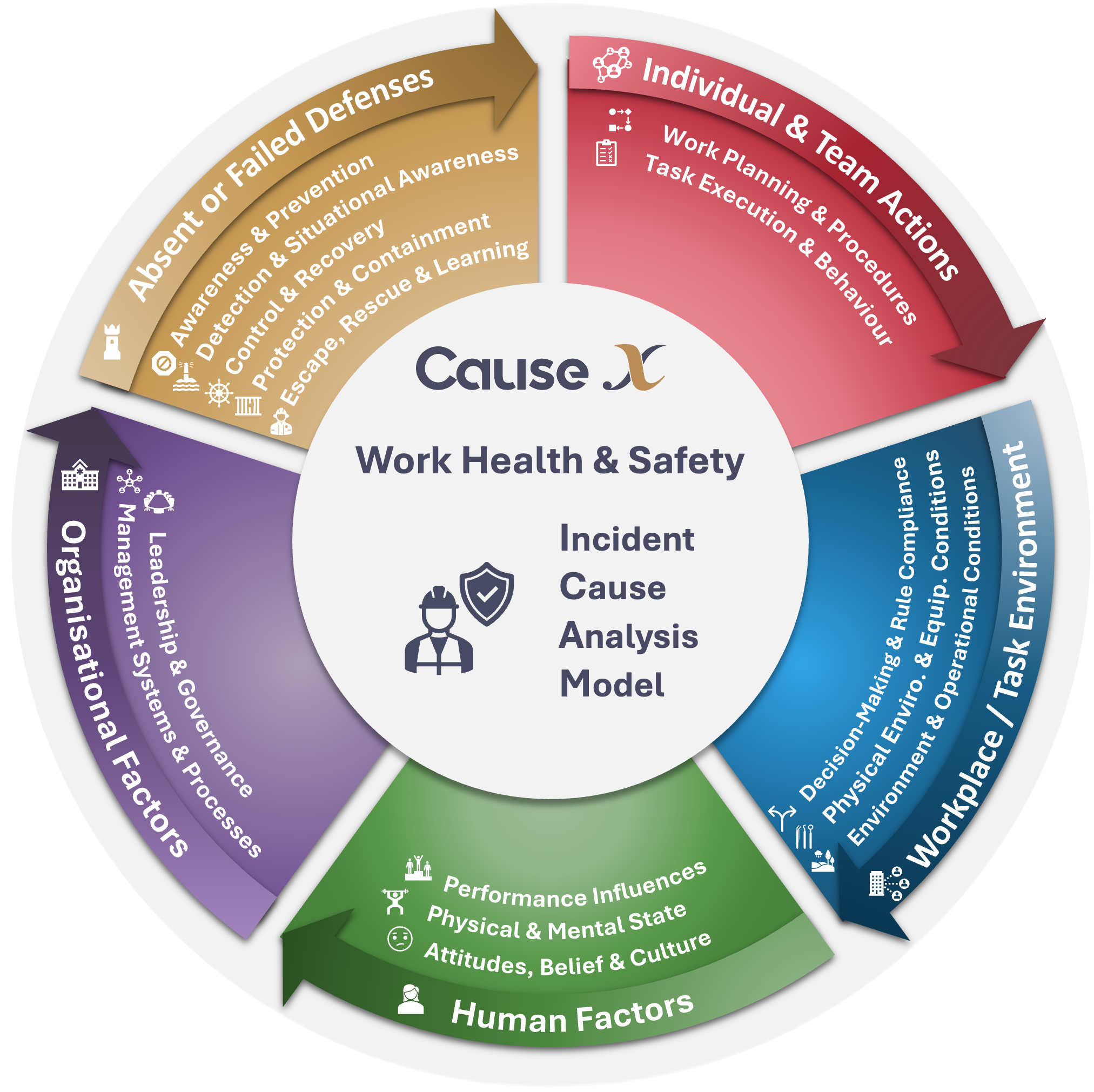
ICAM provides a structured way to examine the full range of factors that contribute to an incident. It considers five key contributing factor groups:
Absent or failed defences — the systems, controls, procedures, or safeguards that should have prevented the incident but did not
Individual and team actions — the decisions, behaviours, and actions taken immediately before and during the event
Workplace and task environment — physical conditions, tools, equipment, task design, and local environmental influences
Human factors — cognitive, psychological, and physiological influences such as fatigue, situational awareness, stress, or workload
Organisational factors — leadership, culture, communication, systems, resourcing, priorities, and governance elements that shape safety outcomes
By examining all five layers, ICAM helps organisations build a clearer, evidence-based understanding of how and why an incident occurred, and what must change to prevent recurrence.
The ICAM process
The ICAM process provides a structured approach to incident investigation and corrective action. It includes:
applying the ICAM framework
preliminary scoping
avoiding conflicts of interest
conducting investigations
identifying contributing factors across the ICAM categories
validating findings
verifying the depth and sufficiency of analysis
ensuring corrective actions are practical and sustainable
reporting and communications

In practice, this means taking a more disciplined approach to incident investigation: clarifying scope early, examining contributing factors rigorously, testing whether the analysis is deep enough, and ensuring that corrective actions address not only the immediate event but the conditions that allowed it to occur.
Why incident investigations often fall short in practice
Incident investigations often focus too narrowly on the immediate actions before an event. That may help explain what happened in the moment, but it can miss the wider environmental, human, and organisational conditions that made the incident possible.
Without a clear framework, investigations can become inconsistent, overly blame-focused, or limited to surface-level corrective actions. A stronger approach requires structure, disciplined inquiry, and attention to both immediate and systemic contributors.
How this framework is used in Columbo
The ICAM framework can be selected within Columbo as one approach to WHS incident investigation. Columbo helps apply investigation frameworks in a more structured and scalable way through adaptive interviews, evidence analysis, traceable outputs, and workflow support.

Use ICAM in practice
Whether you want to strengthen your WHS investigation approach directly or use ICAM within Columbo, we can help.