

Transformation Effectiveness Framework & Process
Transformation should do more than launch successfully. It should be clearly aligned, effectively activated, adopted in practice, and sustained over time.
Transformations and major change programs are costly, complex, and especially difficult in larger organisations. Research commonly finds that around 70% fail or fall short of their initial goals. The challenge is that transformation is about far more than implementing new systems, processes, and tools. Success depends just as much on leadership, mindset, culture, behaviours, and the organisation’s ability to activate and sustain change in practice.
The Transformation Effectiveness Framework provides a structured way to assess whether change has been set up for success, mobilised effectively, adopted in practice, and reinforced over time. It helps organisations examine the conditions, mechanisms, and outcomes that determine whether transformation delivers real and lasting impact.
Why transformation effectiveness matters
Effective transformation review should do more than assess whether a program was delivered. It should help organisations:
understand whether the foundations for change were in place
assess how effectively leadership, communication, and stakeholder engagement supported implementation
evaluate whether people adopted and sustained the intended behaviours
identify what enabled success, what limited impact, and what should improve next time

The Transformation Effectiveness Framework
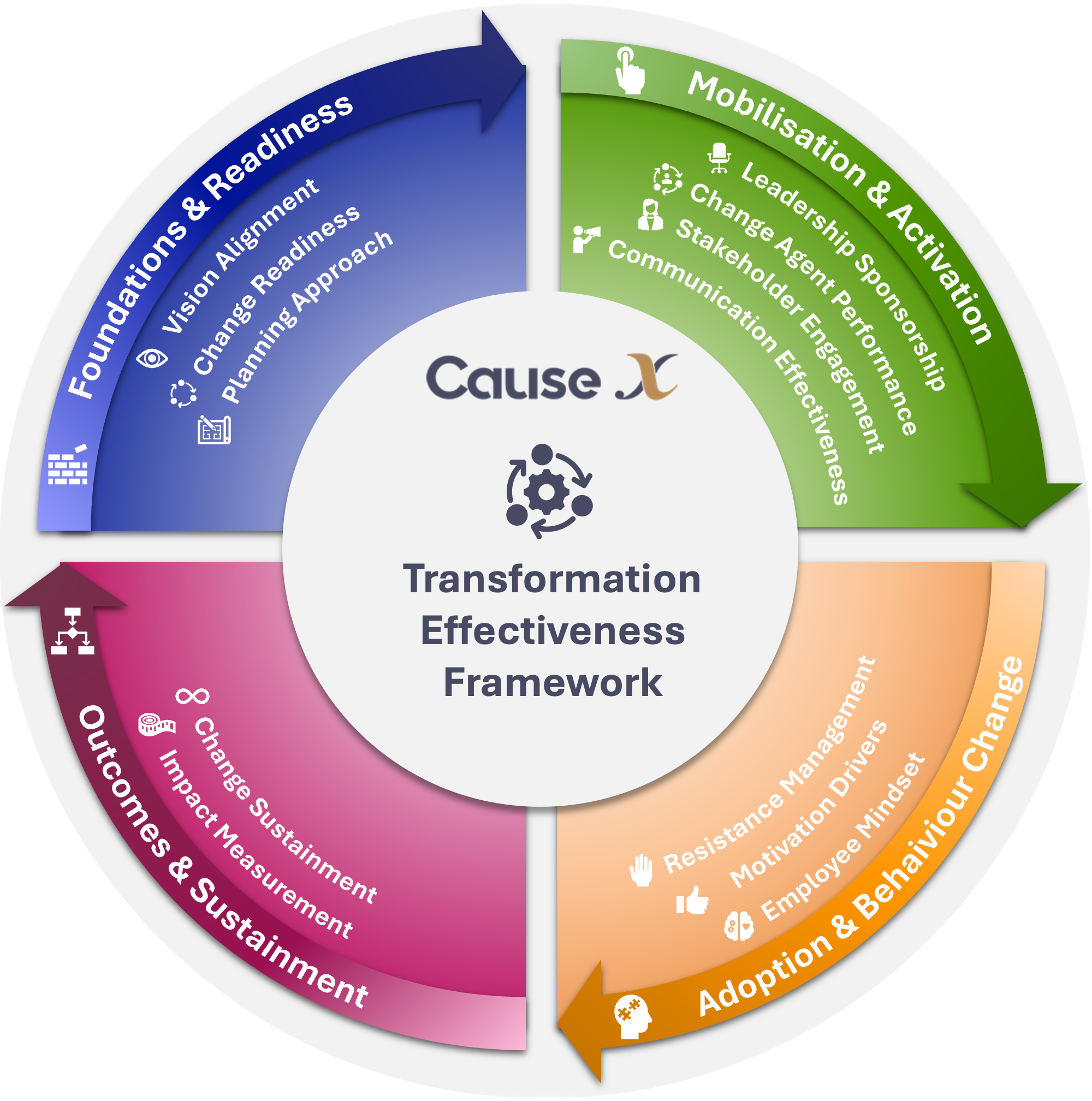
The framework examines transformation effectiveness across four stages of implementation and sustainment:
Foundations and readiness — whether the conditions for successful implementation existed before launch, including alignment, readiness, and planning discipline.
Mobilisation and activation — how effectively leadership, change agents, stakeholders, and communication activated people during implementation.
Adoption and behaviour change — whether employees adopted the intended change in practice, and how mindset, motivation, and resistance shaped uptake.
Outcomes and sustainment — whether the transformation delivered measurable impact and remained embedded over time through reinforcement, learning, and sustainment mechanisms.
By examining all four stages, the framework helps organisations build a clearer view of why transformation efforts succeed, stall, or fail to sustain.
The Transformation Effectiveness Process
The framework provides a structured approach to assessing transformation effectiveness. It includes:
applying the Transformation Effectiveness Framework
preliminary scoping
clarifying the transformation context and intended outcomes
identifying relevant stakeholders and evidence sources
reviewing the transformation across the four stages of implementation
assessing strengths, gaps, and barriers to adoption and sustainment
validating findings
identifying practical recommendations and improvement priorities
reporting and communications

In practice, this means taking a more disciplined approach to transformation review: clarifying what success was meant to look like, examining how the transformation was set up and mobilised, assessing whether behaviours truly shifted, and identifying what is needed to sustain the intended outcomes over time.
Why transformation reviews often fall short in practice
Transformation reviews often focus too narrowly on delivery milestones, completion of activities, or anecdotal sentiment. That may help indicate whether a program moved forward, but it can miss the deeper factors that determine whether transformation was genuinely adopted and sustained.
Without a clear framework, reviews can become inconsistent, overly retrospective, or limited to surface-level observations. A stronger approach requires structure, disciplined inquiry, and attention to readiness, activation, behaviour change, and long-term sustainment.
How this framework is used in Columbo
The Transformation Effectiveness Framework can be selected within Columbo as one approach to assessing change and transformation effectiveness. Columbo helps apply review frameworks in a more structured and scalable way through adaptive interviews, evidence analysis, traceable outputs, and workflow support.

Use the framework in practice
Whether you want to strengthen your transformation review approach directly or use the Transformation Effectiveness Framework within Columbo, we can help.